Source Laparoscopic Tweezer Applier for Abdominal, Burns, and Neurosurgery
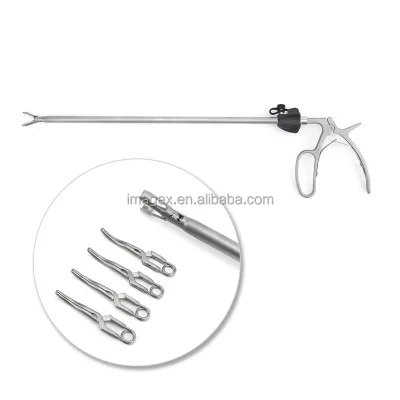
Find and compare 30 laparoscopic tweezer applier options for abdominal, burns, and neurosurgery applications. These reusable and disposable surgical supplies feature EO sterilization and are available from China-based manufacturers with customization and logo printing services.
Key considerations
Products List




Comprehensive Sourcing Guide
Laparoscopic Tweezer Applier Sourcing Guide
Sourcing laparoscopic tweezer appliers requires a nuanced understanding of the intersection between traditional surgical instrumentation and modern endoscopic delivery systems. These devices are not merely passive graspers; they are active instruments designed to facilitate tissue manipulation, hemostasis, or specimen retrieval through small incisions. Buyers must distinguish between standard laparoscopic forceps and specialized applier systems that may integrate with energy sources or disposable components. The procurement process begins with a clear definition of the clinical need, whether for general abdominal surgery, microsurgery, or specialized procedures in urology and anorectal care. Understanding the specific mechanical action required—whether it is a simple pinch, a locking grasp, or a combined cutting and coagulating function—is essential before engaging with suppliers.
The market for these instruments is characterized by a mix of reusable stainless steel tools and disposable plastic or hybrid variants. Buyers often encounter listings that bundle various surgical supplies, including scalpel blades, appliers, and general surgical materials, under broad categories. It is critical to verify that the supplier specializes in the specific type of laparoscopic instrument required rather than a general trading company. The distinction between a "tweezer" style grasper and a more complex "applier" mechanism can significantly impact the price, sterilization requirements, and regulatory classification. Procurement teams must ensure that the terminology used in the request for quotation matches the technical reality of the device to avoid receiving incompatible or substandard products.
Product Scope and Observed Listing Signals
Current market listings indicate a diverse range of product types, including surgical tweezers, scalpels, and general surgical supplies materials. Observed data suggests that products are often categorized under broad applications such as abdominal, burns, neurosurgery, microsurgery, anorectal, urology, orthopedic, and ENT procedures. This wide applicability signal suggests that many suppliers offer versatile instruments that can be adapted for multiple surgical contexts. Buyers should note that some listings explicitly mention "Laparoscopic Surgical" usage, while others list "Operation" as a general function. It is vital to cross-reference these broad application claims with the specific mechanical design of the instrument to ensure it meets the precision requirements of laparoscopic environments, where space is limited and dexterity is paramount.
The observed product attributes reveal a significant split between reusable and disposable features. Some listings highlight "Reusable" and "High-Quality Standard" attributes, often associated with stainless steel construction and specific lengths such as 240mm. In contrast, other listings emphasize "Disposable" features, with materials listed as plastic and models such as PATX240E20 or TALT200. This dichotomy requires buyers to carefully assess their hospital’s sterilization infrastructure and cost-per-use models. Additionally, the presence of "Detachable Two Parts" or "Detachable Three Parts" standards in some listings indicates modular designs that may allow for easier sterilization or component replacement. Buyers must verify if the detachable nature affects the instrument’s structural integrity during high-torque laparoscopic maneuvers.
Technical Specifications to Verify
Length and size specifications are critical for laparoscopic instruments, as they determine the reach and maneuverability within the patient’s body. Observed listings frequently cite a length of 240mm, which is a common standard for many laparoscopic tools. However, buyers must also consider the overall working length and the tip design, which can vary significantly between models like HS-L94 or ESS-346. The size specifications observed include ranges such as S, M, St, Mt, and even M/Ml/L/XL, which may refer to the handle grip size or the tip opening width. It is essential to request detailed dimensional drawings to confirm that the instrument fits the standard 5mm, 10mm, or 12mm trocars used in the facility. The 10mm*450mm standard observed in some listings suggests a different class of instrument, possibly longer reach tools, which requires careful verification against the specific surgical procedures planned.
The material composition and finish of the instrument directly impact its durability and performance. While some products are described as having a "High Quality" finish, the underlying material is typically medical-grade stainless steel for reusable tools. For disposable variants, plastic components are common, often combined with metal tips for strength. Buyers should verify the specific alloy used for reusable instruments to ensure resistance to corrosion and repeated sterilization cycles. The "7-15days" finish time observed in some listings may refer to the manufacturing lead time or the surface treatment process. It is advisable to request samples to test the tactile feedback and locking mechanism of the tweezers, as these subjective qualities are difficult to assess from specifications alone. The "Detachable" design standards observed should be evaluated for ease of assembly and disassembly, ensuring that no small parts are lost during cleaning.
Compliance and Safety Documentation
Regulatory compliance is non-negotiable for surgical instruments, particularly those used in laparoscopic procedures. Observed listings frequently mention certifications such as ISOCE, CE, and ISO, which are critical indicators of a supplier’s adherence to quality management systems. Buyers must verify the validity and scope of these certificates, ensuring they cover the specific product category of laparoscopic tweezers or appliers. The presence of "CE&ISO" certificates suggests that the products meet European health, safety, and environmental protection standards. However, buyers should not assume that all listed products are covered under the same certificate; it is necessary to request the specific certificate for the model number being procured, such as ESS-337 or PATX230E2.
Sterilization and packaging standards are equally important for patient safety. Many observed listings specify "Eo" sterilization, which stands for Ethylene Oxide sterilization, a common method for heat-sensitive medical devices. The attribute "Ethylene Oxide Sterilization" confirms that the product is sterile upon delivery, reducing the risk of surgical site infections. Buyers must ensure that the sterilization method is compatible with their hospital’s acceptance protocols. The packaging is described as "Carton Box" or "International Standard Carton," which should provide adequate protection during shipping. It is crucial to verify that the packaging maintains the sterility barrier until the point of use. Additionally, the "Without Logo Printing" or "With Logo Printing" options should be considered in the context of hospital branding requirements and regulatory labeling laws.
Cost Drivers and Commercial Terms
Pricing for laparoscopic instruments varies widely based on material, complexity, and order volume. The observed price range of 2-260 USD reflects this diversity, with lower prices likely corresponding to simple disposable tweezers or basic components, and higher prices associated with complex reusable appliers or specialized models. Buyers should be cautious of prices that seem unusually low, as they may indicate inferior materials or lack of proper certification. The minimum order quantity (MOQ) observed ranges from 1 to 10, suggesting flexibility for small hospitals or clinics, but also indicating that bulk discounts may be available for larger orders. Understanding the cost structure helps in negotiating better terms and planning inventory levels.
Commercial terms such as shipping methods and delivery times significantly impact the total cost of ownership. Observed shipping methods include DHL, UPS, FedEx, EMS, TNT, and Air Cargo, which are standard for international medical device trade. Buyers should factor in shipping costs and transit times, which can affect the availability of critical surgical tools. The observed delivery time of 7-15 days is a key operational metric for procurement planning. However, buyers should confirm if this lead time includes customization, such as logo printing, which may extend the production schedule. The "OEM: Yes" attribute indicates that suppliers are willing to produce custom-branded products, which can be a value-add for hospital networks seeking consistent branding. Clear communication regarding payment terms and warranty policies is essential to mitigate financial risks.
Supplier Qualification and Quality Control
Evaluating supplier qualification requires a thorough review of their manufacturing capabilities and quality control processes. Buyers should prioritize suppliers who explicitly state "High-Quality Standard" and have verifiable certifications. The origin of the products, observed as China, is a common source for medical instruments, but buyers must ensure that the supplier has a robust quality management system in place. Requesting audit reports or third-party verification of the supplier’s facilities can provide additional assurance. The ability to provide samples for testing is a strong indicator of a supplier’s confidence in their product quality. Buyers should test the samples for mechanical integrity, sterilization compatibility, and ease of use in a simulated environment.
Quality control should extend beyond the initial purchase to include ongoing performance monitoring. Buyers should establish clear acceptance criteria for incoming shipments, including checks for packaging integrity, sterilization indicators, and physical defects. The "International Standard Carton" packaging should be inspected for damage during transit. Suppliers who offer "Customization" services should be evaluated on their ability to maintain quality during the customization process. It is advisable to include quality clauses in the purchase agreement, allowing for returns or replacements if the products do not meet the specified standards. Building a long-term relationship with a reliable supplier can lead to better pricing, priority production, and improved support for any quality issues that may arise.
Long-Term Procurement Checks
Sustainable procurement practices require regular reviews of supplier performance and product lifecycle management. Buyers should track the performance of laparoscopic tweezers and appliers over time, noting any issues with durability, sterilization resistance, or clinical performance. This data can be used to negotiate better terms with current suppliers or to identify alternative sources if quality declines. The "Reusable" nature of many instruments means that their lifespan is a critical factor in total cost analysis. Buyers should monitor the number of sterilization cycles each instrument can withstand before showing signs of wear. For disposable items, the consistency of supply and quality is paramount to ensure uninterrupted surgical operations.
Regulatory changes and market trends can also impact procurement strategies. Buyers should stay informed about updates to certification requirements, such as changes to CE or ISO standards, and ensure that their suppliers remain compliant. The introduction of new technologies, such as energy-integrated laparoscopic tools, may necessitate a reevaluation of current product portfolios. Buyers should engage with suppliers to discuss future product developments and potential upgrades. Additionally, considering the environmental impact of disposable versus reusable instruments can align procurement with hospital sustainability goals. Regularly reviewing the product mix and supplier base ensures that the hospital remains equipped with the best available technology for laparoscopic surgery.
FAQs
What types of laparoscopic instruments are available?
The product line includes surgical tweezers, scalpels, and general surgical supplies materials. These instruments are designed for various applications such as abdominal, neurosurgery, microsurgery, anorectal, urology, orthopedic, and ENT procedures. They support both laparoscopic and general surgical operations with high-quality standards.
Can these instruments be customized for specific needs?
Yes, customization is available for these laparoscopic instruments. Buyers can request specific modifications to meet their surgical requirements. The manufacturer supports OEM services, allowing for tailored solutions. This flexibility ensures that the instruments align precisely with the operational needs of different medical facilities and surgical teams.
What certifications do these surgical tools hold?
These instruments hold ISOCE and CE&ISO certifications. These credentials indicate compliance with international quality and safety standards for medical devices. The certifications ensure that the products meet rigorous manufacturing and quality control requirements, providing assurance to healthcare providers regarding the reliability and safety of the surgical tools.
How are the instruments sterilized and packaged?
The instruments undergo Ethylene Oxide (Eo) sterilization to ensure they are safe for immediate use. They are packed in carton boxes, often following international standard packaging guidelines. This method maintains sterility during transit and storage, ensuring that the products arrive in optimal condition for surgical procedures without compromising hygiene standards.
What is the typical lead time for delivery?
The delivery time is typically 7-15 days. This timeframe allows for efficient processing and shipping of the orders. Buyers can expect their laparoscopic instruments to be dispatched within this window, facilitating timely availability for surgical needs. The lead time is consistent with standard manufacturing and logistics practices for medical supplies.
Which shipping methods are supported for these products?
Shipping is available via DHL, UPS, FedEx, EMS, TNT, and air cargo. These methods ensure reliable and fast delivery to various global destinations. The choice of shipping method can be tailored to the buyer's urgency and location, providing flexibility in logistics management. This variety supports efficient distribution of surgical instruments worldwide.